
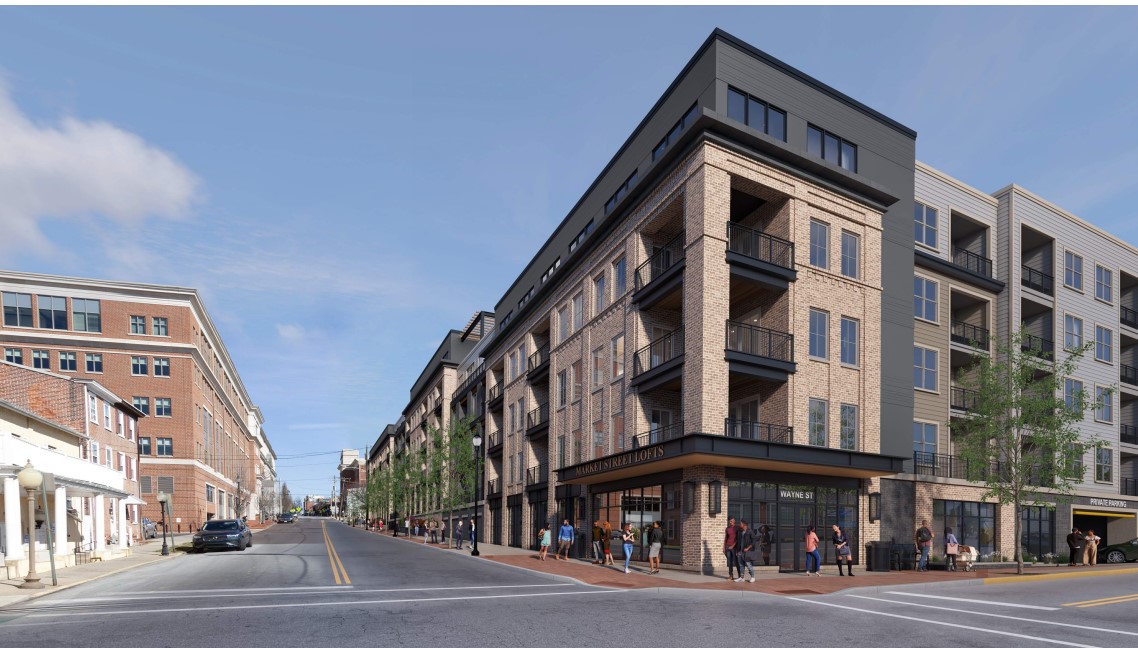

Last month Borough Council voted unanimously to approve a 128-unit residential apartment building at 410 S. High Street where the shell of the Burger King property still remains. Two months before, they approved a 185-unit complex at 330 W. Market St, the former home of Mitch’s Gym. Both approvals came despite fervent opposition from neighbors (residents in the vicinity of BK went so far as to hire legal representation.) They raised legitimate concerns over parking, traffic, and scale.
While the review process was not futile – developers made concessions to the footprint of the building, parking (neither complex will be allowed to participate in the Borough’s residential parking program), and design – it did not yield the result many had hoped for: smaller scale.
“Less big and more aligned with the rest of the neighborhood,” one resident local to the BK property told me. “If it was going to be housing then something similar to what we see on Dean or Price would have been nice.”
So what’s happening? Why do these massive, cookie-cutter complexes keep getting the green light despite resident opposition and seemingly little excitement for them by anyone involved in the process? As it turns out it’s because this is what we as a community have been asking for by way of our Zoning Code, a legal tool that lets developers know what can be built where.
To get a better picture of what is going on and how we strayed so far from the narrow row homes of our prized historic district, I took a walk with West Chester Planning Commission member and architect Thomas Dougherty.
“The Borough wasn’t built 200 units at a time,
Thomas Dougherty, West Chester Planning Commission
it was built a few row homes at a time.”

The Way We Were
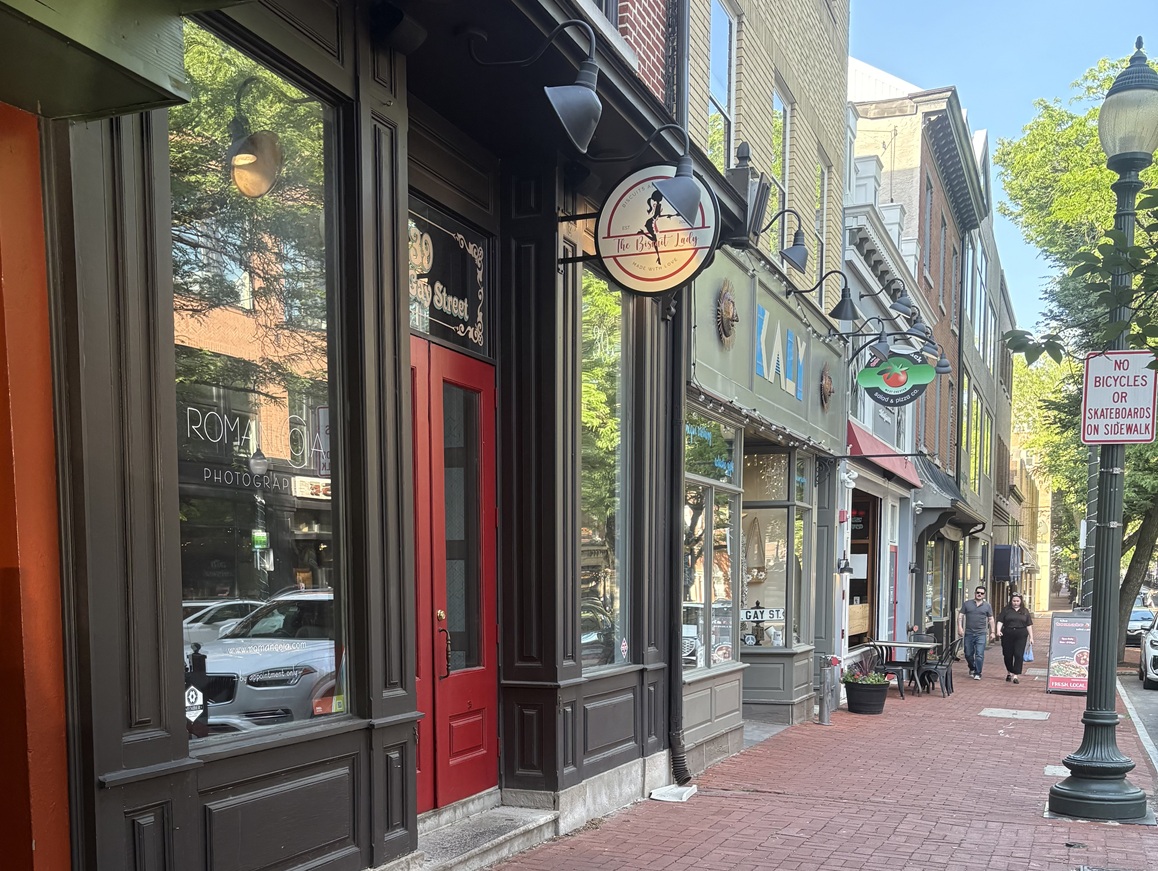
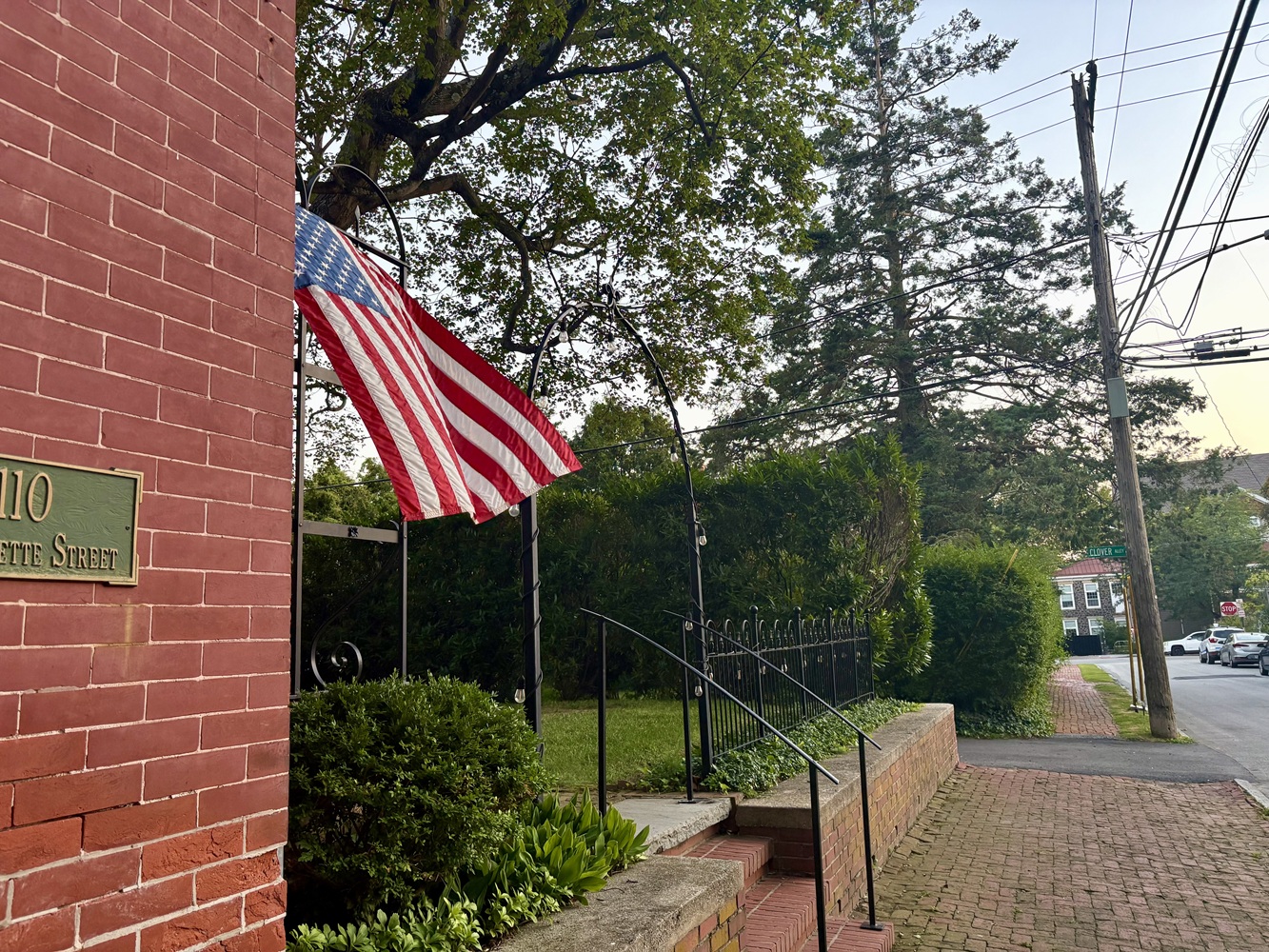
We met at Mitch’s and wound our way through West Chester’s historic district to the Burger King lot on High St. Along the way we passed blocks and blocks of narrow row-homes – many just 16 ft across.
“I feel like the Borough is changing without proper guidance,” said Thomas. He pointed out that while plans for Mitch’s and BK, were designed “by right” or in alignment with the Borough’s Zoning code, the properties we passed on Darlington Street couldn’t be built today without a developer obtaining a number of variances, or special permissions from the Borough. This is in part because the Borough Zoning Code sets a minimum lot size but not a maximum lot size. Developers easily and routinely combine lots (four lots were combined to house the new Market St. development). However, in December, Borough Council voted unanimously to send the solicitor to fight a request to reduce the allowable median lot size on Dean St.
And variances, as it turns out, are easily challenged. Even if a municipality decides not to fight the request many others could, thus opening the developer up to long and potentially costly legal battles. It’s a path most developers – fairly – just won’t risk. As Thomas explains, when the “headache” (risk, time, cost) to pursue a 20-unit development is the same as it is to pursue a 200-unit one, developers understandably take the larger route. It also makes it difficult for any but the largest firms to invest in the Borough. “Any developer or builder without the capital to pursue and build over 100 units can simply not compete,” said Thomas.
So what can we do? Thomas had a few suggestions.
Looking to the Future


Legalize the historic building and development form of West Chester – Remember that home on Darlington Street? Thomas thinks we should start by making it legal again. “Our current minimum lot size in the NC2 district is 20 ft wide and requires two off-street parking spots. It would be illegal to build the homes along Darlington Street or New Street,” he said
Incentivize the building types that reflect the Borough – “Walk around the Borough, what do you like? What contributes and defines the feel of West Chester?” said Thomas. “Let’s start by legalizing these building types (for example, the 16 ft. wide brick row-homes) and incentivizing their development over others by making them easier to build.”
Walk down Adele Alley aka Burger View – Want to encourage an inner-block streetscape with narrow dwellings like this? Determine what would be acceptable and outline how builders can do it – by right. Then streamline the approval process to make it the easiest of all options to build. Prioritizing and streamlining projects that promote gentle density growth would not only better align with the wishes of residents, but would also help bring in more small-scale developers.
Set a maximum lot size – we already have a minimum lot size which is bigger than many of the Borough’s historic homes. We could also easily set a maximum lot size. This wouldn’t necessarily stop large developments but it would require developers to get a variance or break them up into a couple of individual buildings.
Get residents involved in the process – “What does the builder know about what’s appropriate [in West Chester]?” asks Thomas. “Ask the people who walk the street.”
None of this is an effort to discourage what is likely forthcoming growth – West Chester was the top real estate market in the country after all. A few changes, though, could better manage how we grow and getting there really wouldn’t be that hard.
“All it would take would be for Borough Council to change the zoning,” said Thomas.
This story was originally published on Jan. 12, 2024
This story was part of a longer West Chester newsletter featuring all the news and events of the week. Curious what else is going on? Subscribe now to get the full story. New issue comes out Friday.

Leave a Reply